
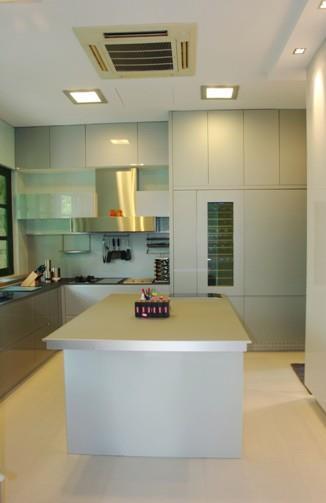
For homeowners planning a luxury landed property or Good Class Bungalow in Singapore, deciding on the relationship between the dry and wet kitchen is one of the most crucial spatial decisions.
The Purpose of the Dry Kitchen
The Dry Kitchen is primarily a social stage. It houses beverage stations, wine cellars, coffee machines, breakfast preparation zones, and light induction cooking. It is designed to be on display 24/7, maintaining visual harmony with the dining and living spaces.
The Engineering of the Wet Kitchen
The Wet Kitchen is an industrial culinary engine. It requires high-output gas wok burners (up to 5.0kW), heavy-duty commercial extraction (1200m³/h+), non-porous stainless steel or sintered stone surfaces, and airtight doors to keep cooking odors contained.
Material Selection for Both Zones
While the Dry Kitchen celebrates tactile woods, smoked glass, and bookmatched marbles, the Wet Kitchen prioritizes marine-grade 304/316 stainless steel, aluminium honeycomb carcasses, and anti-drip worktop profiles.
In Conclusion
When both kitchens are designed with equal care and purpose, homeowners enjoy the best of both worlds: effortless entertaining and unapologetic culinary power.